
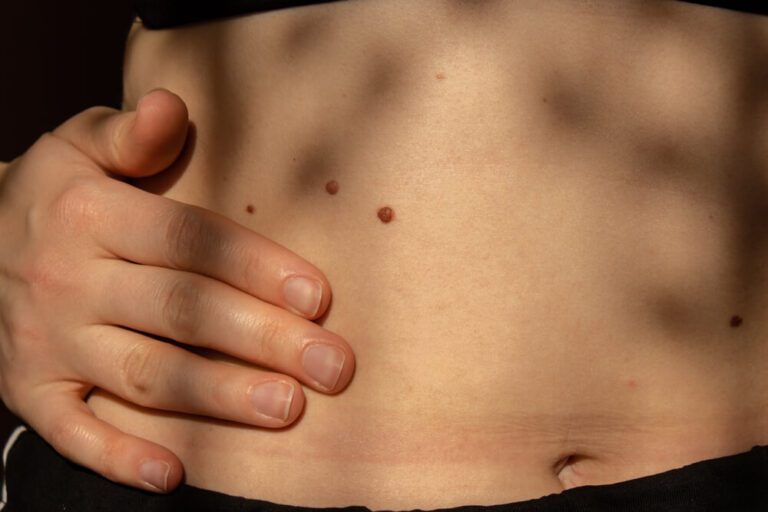
Warts are often dismissed as a minor skin issue, but for many of us, they can become anything but. Painful, persistent, and repeatedly recurring warts can affect comfort, confidence, and everyday life, especially when they appear on visible areas such as the hands or on weight-bearing areas like the feet.
Whilst some warts resolve on their own, others linger despite months of home treatments or repeated freezing. It’s often at this point that patients begin searching for a wart removal clinic, wart removal near me, or simply wart removal, looking for an option that feels more targeted, clinical, and considered.
You may have noticed that laser treatment is often mentioned as a next step, but it’s rarely explained; what does laser wart removal actually do beneath the surface? Why is it often reserved for stubborn warts or after other treatments have failed? And who is it genuinely suitable for?
For our patients who searched wart removal St. Albans or wart removal Hertfordshire to find us, they’ve found that understanding the science behind laser treatment is key to making an informed decision. Pulsed dye laser technology, such as Regenlite, works differently from traditional wart treatments and, in the right hands, they offer a precise and effective option for warts, especially those that are stubborn and have failed to respond to simpler approaches.
In this article, we’ll use our expertise as a wart removal clinic to explain how laser treatment for warts work, when it may be worth considering, why an expert assessment and correct diagnosis matters, and the alternative treatment option we may turn to if a patient is non-responsive to other wart treatments.
What Is In This Blog:
Warts are benign viral skin growth caused by certain strains of the human papillomavirus (HPV). When warts grow on the feet they are commonly known as verrucae.
A few points to remember:
Warts may appear as firm, rough bumps that vary in size and number. Although harmless, they can be uncomfortable, easily caught or knocked, persistent, or cosmetically bothersome.
The HPV infects the keratinocytes which is the predominant cells of the outer skin layer; this leads to hyperkeratosis, skin thickening, and epidermal cell proliferation. These processes are what creates the characteristics of a raised wart.
Please be reassured that warts are not malignant. They are a skin response to a viral infection rather than an uncontrolled cancerous growth.
Some warts fade. Others dig in. If you’ve tried home treatments, freezing, or repeated appointments with little change, it’s time for a more precise approach. At Skin to Love Clinic in St Albans, wart removal starts with expert assessment, not assumptions. We’ll identify exactly what’s going on beneath the surface and advise whether laser treatment is appropriate, or whether another clinical option will give you better results. Book your wart assessment today and get a plan that’s targeted, considered, and designed for real clearance, not repeat frustration.
The STL Expert Edit: Highlights & Key Takeaways
Laser treatment is not a “stronger” version of freezing or acids; it works by targeting the wart’s blood supply, not the surface skin.
Pulsed dye laser is most effective for stubborn, painful, or recurrent warts that haven’t responded to standard treatments.
Not all warts need laser; early or superficial warts may respond well to simpler approaches.
Correct diagnosis matters; some lesions that look like warts are not warts at all.
At Skin to Love, treatment choice is based on clinical need, not escalation by default.
Although warts are caused by a viral infection, their growth and persistence rely on a supporting network of tiny blood vessels that grow within the wart.
Below the thickened surface, wards often have a vascular network that supply oxygen and nutrients to the infected tissue. These micro-vessels are sometimes visible as tiny black dots within the wart surface.
It’s the presence of this blood supply that supports wart, making it resist being broken down by some treatment methods. For treatments to be effective they often need to disrupt this supportive environment.
This is precisely the principle behind pulsed dye lasers (PDL). This laser emits light that is preferentially absorbed by blood. This allows us the selectively heat and collapse those micro-vessels that are feeding the wart, taking away the lesions support network and allowing the body’s own clearance mechanisms to take over. Clinical data shows these actions as the key reasons why pulsed dye laser can be effective in wart management, especially for stubborn and recurrent warts.
An established ward isn’t just superficial skin thickening; the virus driven tissue often depends on a supportive bloody supply to survive.
Some front-line treatments, such as salicylic acid, primarily target surface skin layers. Whilst this can be very effective on new or thin warts, it doesn’t always address what’s happening deeper within the lesion.
Warts can be resistant to treatment because:
In such cases, repeatedly freezing or stripping the surface of the wart may cause discomfort without addressing the underlying support network that allows the wart to persist.
PDL treatment differs fundamentally from traditional wart treatments as it does not focus on removing the surface of the wart. Instead, it targets the very thing that allows the wart to survive.
As mentioned earlier, established warts require a network of tiny blood vessels to feed the infected tissue. Pulsed dye lasers, such as Regenlite, are designed to selectively target this blood supply.
The Regenlite laser emits light at a wavelength that is absorbed by the red pigment within blood. When applied to a wart, this light energy is taken up by the small blood vessels feeding the lesion.
In short, without adequate blood supply, the wart tissue becomes unsustainable. Overtime, the body is better able to break down the wart and clear it more effectively; often with less trauma to the healthy skin that surrounds the wart than some surface-based methods.
Disclaimer: This blog is not to be used for diagnostic purposes. We are all unique which means that our results, recovery and suitability for any type of treatment will vary. Always seek the advice of a professional should you have any health or cosmetic concerns or to discuss treatments specifically for you.

Written by clinic co-founder Kerri Lewis | Medically reviewed by Nurse Jane Lewis, RN | The Skin to Love Clinic, St. Albans | CQC regulated | Save Face accredited | HydraFacial verified provider | Published September 2026. The difference between a facial and a HydraFacial isn’t just the products and ingredients used. It’s how they […]

18 Sep 2026

Written by Kerri Lewis, Co-founder | Medically reviewed by Nurse Jane Lewis RN, The Skin to Love Clinic, St. Albans | CQC regulated | Save Face accredited | Published September 2026. That mark on your chest. The small rough patch on the back of your hand. The little bump just below your hairline that looks […]
10 Sep 2026


Contact
T: 01727 837429
E: info@theskintoloveclinic.co.uk
E: feedback@theskintoloveclinic.co.uk
Feedback directly to CQC: https://www.cqc.org.uk/give-feedback-on-care
The Skin to Love Clinic
13-15 Chequer Street,
St Albans,
Hertfordshire,
AL1 3YJ
Subscribe
To receive the latest offers and updates enter your email address below to sign up to our mailing list.
You may opt out at any time.
Open© 2026 The Skin to Love Clinic | Cookie & Privacy Policy | Company Privacy Notice | Website Disclaimer | Web design by Cariad Marketing The Skin To Love Clinic Registered Address: Unit 4, Sandy Court, Ashleigh Way, Plympton, Plymouth PL7 5JX. Registered Company 08397290. VAT Reg: 162291028.