Written by Nurse Jane Lewis, RN and Clinic Founder | The Skin to Love Clinic, St. Albans | CQC regulated | Save Face accredited | British Association of Medical Aesthetic Nurses (BAMAN)
In the past few years, interest in polynucleotide treatment has grown significantly in clinics like ours in St. Albans... There are well-respected treatments that don’t get the big fanfare, they sit solidly in our suite of treatments allowing us to offer clinically proven results to our patients. Then there’s others that come with a big buzz; polynucleotide treatment is one of them.
Patients are coming in having already researched them, having heard about them from friends, having seen them mentioned in articles or on social media. And so, most of the questions we answer in those consultations are: what are they made of? What do they actually do? Do they really work? Are they safe? What will I notice?
These are exactly the questions I want to answer here, honestly, clinically, and without the hype that tends to build up around ‘trending’ treatments. I’ll caveat this with... I am a hopeful sceptic. I moved from psychiatric nursing, where I began my career in the 1970s, into plastic surgery and aesthetic-medicine looking for the ‘elixir of youth’ (if you’ve ever watched Death Becomes Her, I’m talking Isabella Rossellini vibes). What I have found in those decades since are many incredible non-surgical skin treatments, but I always approach them with scepticism until I see the clinical studies showing efficacy and safety, as well as having tried them myself.
What I offer here is not a marketing perspective, but a clinical one: myself and my team use polynucleotides regularly in our St. Albans clinic. We see the results that can be achieved in our patients, and I know where the evidence is strong and where more research is needed.
So: here is what I actually think you need to know.
What are polynucleotides?
Polynucleotides (often abbreviated to PN or PDRN) are fragments of DNA. If you’ve been researching, you’ll have likely come across polynucleotides being called ‘salmon sperm injections’ which, granted, has created quite a marketing buzz. But the truth is, it’s not quite as crude as the nicknames would make it sound.
Polynucleotides are derived (key word) from salmon or trout sperm. The occasional patient has asked about this and the answer is yes; the source is marine. The DNA is purified, processed and sterilised to a degree that removes any biological material other than the DNA chain fragments themselves. What is used during your polynucleotide treatment is highly purified nucleotide sequences, not anything resembling the source material. To be absolutely clear, we are not injecting the skin with sperm, it is purified fragments of DNA derived from it.
Whilst we’re on the topic of what they are, I'll briefly clarify an important distinction that can cause confusion: the abbreviations of PN and PDRN technically refer to different molecular weight ranges of the compound. You’ll see the abbreviations used interchangeably throughout literature. What actually matters for you, as a patient, is that both work through the same biological pathway... and that the preparation used in aesthetic medicine is a medical-grade, CE-marked injectable product, not a cosmetic product.
What do polynucleotides do?
How polynucleotides work (also called the ‘mechanism’) is genuinely interesting. When polynucleotides are injected into the dermis (the living part of our skin), they’re broken down by naturally occurring enzymes into nucleotides. These nucleotides then bind to your fibroblasts; fibroblasts are the cells responsible for producing structural proteins in your skin, such as collagen, which give your skin it’s quality.
This triggers lots of biological activity: reduced inflammation, improved skin healing, enhanced skin cell turn-over (the natural shedding of dead skin cells), the formation of healthy new blood vessels (microcirculation=healthier skin), and, critically, an increased production of collagen, elastin, and fibronectin.
hese last three proteins collectively determine your skins firmness, elasticity, and texture. There’s also evidence of a second mechanism where the fragments are taken up by the cells and recycled, giving them the fuel to accelerate protein production.
Ok, now the science is out the way: the polynucleotide treatment doesn’t add volume and sit in the skin like a filler, for example. They give your skin cells a signal that tell them to produce more of what your skin needs. This is why results develop progressively over weeks rather than being immediately obvious; after treatment, you are waiting for your own biology to respond, and what you eventually see is your own tissue, genuinely renewed.
For context, collagen production in our skin declines by about 1% each year from the mid-twenties. Over a decade, this loss can become visible as reduced firmness, skin sits differently, tone isn’t quite as even. And then, for us women, perimenopause and menopause accelerate that decline. Polynucleotides address these changes at a cellular level by reactivating processes that your skin already knows how to do.
Do polynucleotides work?
Polynucleotides do work. My team and I have seen it with our patients. However, whilst the research base is promising, it is still growing.
A systematic review published in 2025 in the Journal of Cosmetic Dermatology analysed nine different studies covering 219 patients receiving PN treatment.
It found that polynucleotide treatments showed promising outcomes; reducing wrinkles, improving skin texture, and enhancing elasticity, with statistically significant results in several of those studies. Patient satisfaction was rated moderate to high in all the reviewed studies also.
The same review is transparent that there are a relatively small number of studies and that there was a variation in protocols, treatment areas, and products used. As a medical professional, I believe it is important to share this.
Polynucleotides have been used in medicine, in ophthalmology, orthopaedics and wound healing, for decades, so the safety profile of the substance itself is well established. What's newer is their application in aesthetic medicine, and the research here is still growing.
This is not unusual in medical aesthetics. Botulinum toxin; the drug behind wrinkle relaxing injections was used medically for years before anyone thought to use it cosmetically. It was first approved in 1989 for misalignment of the eyes, blepharospasm and hemifacial spasm. The cosmetic results were almost incidental: Dr Jean Carruthers, a Canadian ophthalmologist, noticed that patients being treated for eye spasms were also losing the frown lines between their brows. She and her dermatologist husband Alastair published the first paper on its cosmetic use in 1992. Today, it's one of the most widely performed treatments in medical aesthetics worldwide.
The point is not that all new treatments are good, because that’s untrue. It's that a shorter aesthetic evidence base doesn't automatically mean a weaker efficacy story; and with polynucleotides, the biological mechanism is sound, the medical history is long, and the clinical results are consistent.
What we have with polynucleotides is a strong body of clinical evidence, a mechanism that’s well understood with an established safety profile. The studies are catching up with the clinical experience, and the trajectory is a good one.
My colleague, Nurse Joanne Scott RGN INP, tells us “With my patients, I’ve seen results that are consistent with the clinical studies; improved skin quality, better hydration, an improvement in the vitality of the skin. I've used it for facial scarring with good effect too. The changes aren’t dramatic, instantaneous changes, they’re progressive, natural improvements that build over the course of treatments and the feedback from patients is positive”.
Are polynucleotides safe?
Yes. The safety profile of polynucleotides is established and reassuring. The Lampridou systematic review found that side effects were generally mild and transient across all reviewed clinical studies. Temporary redness, swelling or bruising at the injection site were most commonly reported and resolved quickly; this tends to be true for all injectable treatments. No serious adverse events were reported in the reviewed studies.
From a clinical perspective, polynucleotides are well-tolerated across a wide range of skin types and ages. Because they work with the body’s own biology the risk of inflammatory or allergic reaction is low; this tolerability extends to sensitive skin types too.
There is also early and promising evidence the polynucleotides may help manage symptoms of rosacea. A 2024 study showed polynucleotide treatments produced a measurable improvement in persistent facial redness after three sessions. As a rosacea sufferer and as a nurse who treats rosacea symptoms, I’d love to see more studies on this. For a condition where sufferers often struggle to find treatments their skin can tolerate, the anti-inflammatory benefits of polynucleotides make them a clinically logical option.
As with all injectable treatments, we would always recommend seeking care through a CQC-regulated, medically led clinic; one with full clinical oversight, medically qualified and insured practitioners.
During your consultation, it’s important to give a full and honest medical history to your medical practitioner so that they can offer you the safest treatment options.
What should I expect: results and timeline?
Many patients start to notice subtle changes in skin quality in the weeks following the first session; improved skin hydration, more of a glow. The more structural improvements, such as improved firmness and softened wrinkles, tend to become more evident after the full course. We recommend that patients have a single treatment session to maintain their results once or twice a year should they wish.
The standard protocol for polynucleotide treatment involves a course of treatments; typically, three sessions, spaced approximately four weeks apart. This will be discussed during your consultation taking into account the area being treated and the individual.
Results are not immediate. The polynucleotide treatment works by stimulating your own biological processes and this can take weeks so expect for improvements to build progressively over the course of treatments.
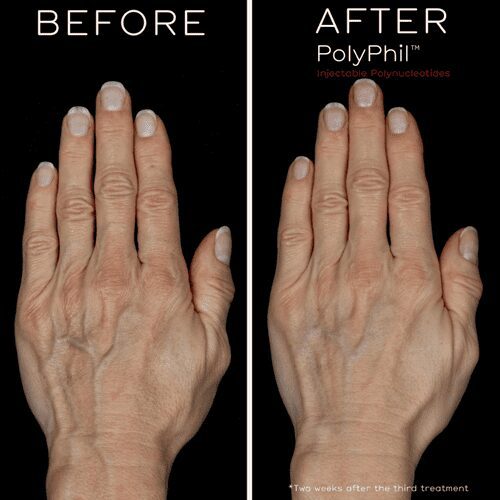
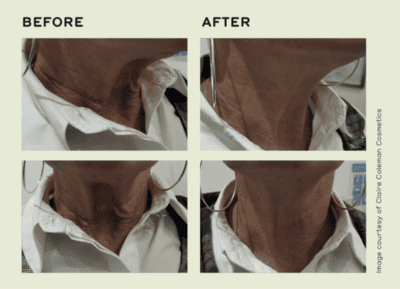
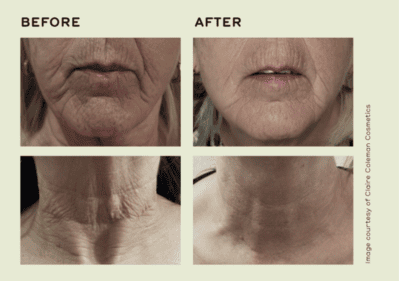
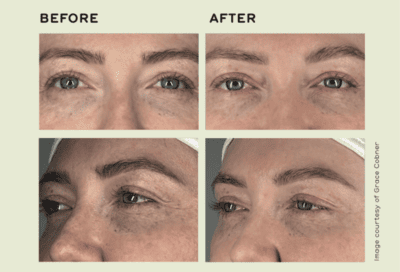
The polynucleotides before and after difference is precisely what many of our patients are looking for; subtle rather than a dramatic transformation. This is not a treatment for significant volume loss or structural correction; in some patients with more advanced skin changes we may choose an alternative treatment such as Sculptra, Radiesse, or Thermage.
Polynucleotides is a treatment for skin quality and when the results land, they look and feel natural, because they are: it’s your own collagen, your own elastin, produced by your own cells responding to the treatments prompt.
Who is polynucleotides treatment best for?
Polynucleotide treatment is well-suited to a wide range of patients; one of the reasons we love it in clinic. In our experience, it works well for patients in their late twenties through to their 60s who are seeing gradual changes in their skin quality; reduced luminosity, slightly rougher texture, early lines, or generally feeling that their skin feels less vital than it used to. It suits all skin tones and is well-tolerated by sensitive skin.
Polynucleotides are at their most powerful as a skin quality treatment: restoring the biological vitality of the dermis rather than reshaping or restoring volume to it.
It is not the right treatment for significant volume loss, deep structural changes, or skin that has more advanced sagging. Those require a different approach and a thorough consultation with a medical practitioner will identify which treatment is appropriate for your specific needs and requirements.
Possibly the most popular area we treat at our skin clinic in St. Albans is the periorbital area around the eyes, with patients travelling from across Hertfordshire specifically for this.