

To understand why under-eye wrinkles and hollowing behave so differently to lines anywhere else on your face, it helps to know this part of you was never really built for durability, rather than anything you've done to cause them. The skin here is the thinnest on your entire face (upper eyelid skin measures roughly 759 microns against nearly 2000 microns on the side of your nose), according to one of the most detailed maps of facial skin thickness ever produced, which is exactly why it's usually the first place ageing shows and the hardest place for concealer to convincingly hide it.
"There are two genuinely separate things happening under the eyes, and being unaware of this is how you could end up disappointed by a treatment that was never going to fix your actual concern." Nurse Jane Lewis tells us.
The first is structural. Your eye socket is cushioned by small pads of fat that, with age, tend to shrink and shift downward, taking that support with them. Lose that cushioning and the bony rim of the socket becomes more visible, casting a shadow that reads as hollowing, or a dark circle, even when there's no pigment involved at all. This is well established in the clinical literature on what's known as tear trough deformity.
The second cause is textural, the crepey skin and fine lines that are about skin quality rather than volume, and it comes down to two proteins doing very different jobs. Collagen gives skin its structure and firmness, the scaffolding that keeps it looking plump and supported. Elastin is what gives skin its stretch, its ability to spring back rather than crease and stay creased. Collagen slowly but surely declines from your mid-twenties onward, by around 1% a year, according to one of dermatology's foundational studies, treat that figure as a guide, not gospel, everyone's skin keeps its own clock. This decline accelerates further around menopause too, research on postmenopausal skin has found collagen loss speeds up in the years that follow; add that to the ever-growing list of menopausal symptoms. Elastin is trickier still: research tracking just how long elastin survives in human skin has found it's barely replaced once made, so once it's gone, it's largely gone, unless it's stimulated by a treatment that's clinically shown to support its production. Both declines show up fastest wherever skin is thinnest, which, as above, is exactly here, around your eyes.
There's a third factor at work too: movement. The muscle around your eyes fires thousands of times a day with every blink, squint and smile, folding this already-thin skin again and again. In skin with plenty of collagen and elastin, it springs back each time. But as those proteins decline, the fold stops fully releasing, and what starts as a temporary expression line, the crease you only see when you smile, gradually settles into a permanent one, still there when your face is at rest. An eight-year study tracking exactly this progression found expression lines turning into persistent wrinkles over time in the women followed. This combination, thinning skin, declining proteins, and years of repeated movement, is what produces true under-eye wrinkles and crow's feet.
Same area, different causes, and as you'll see next, different treatment approaches.
When under eye hollowing is your concern, the most direct fix is volume: tear trough filler, sometimes called under eye filler, is a hyaluronic acid gel designed specifically for this area, and it works by replacing exactly what's been lost. In one of the more rigorous trials done on this exact concern, a multicentre, randomised study assessing hyaluronic acid filler in the correction of infraorbital hollows found the majority of patients were still showing visible improvement a year on, with results rated as natural rather than overfilled. Because it's hyaluronic acid, it's reversible too: a wider body of clinical research on managing filler results confirms an enzyme called hyaluronidase can dissolve it if you ever need it undone, an important layer of reassurance for a treatment this close to the eye.
Here's a part that not everyone tells you about tear trough filler: “Hollowing under the eye doesn't always start under the eye. Sometimes the real cause sits lower down, in the cheek, where volume loss changes how light falls across your whole midface and casts a shadow that looks exactly like true tear trough hollowing, without a drop of filler needed there directly” explains Nurse Natalia. A recently published framework for assessing lower eyelid dark circles makes this same point: treatment should follow a proper assessment of where the problem actually sits, cheek, tear trough, or both, rather than assuming the under eyes have no connection with what’s happening with the face holistically. This is exactly why cheek filler is sometimes the answer instead of, or in combination with, tear trough filler.
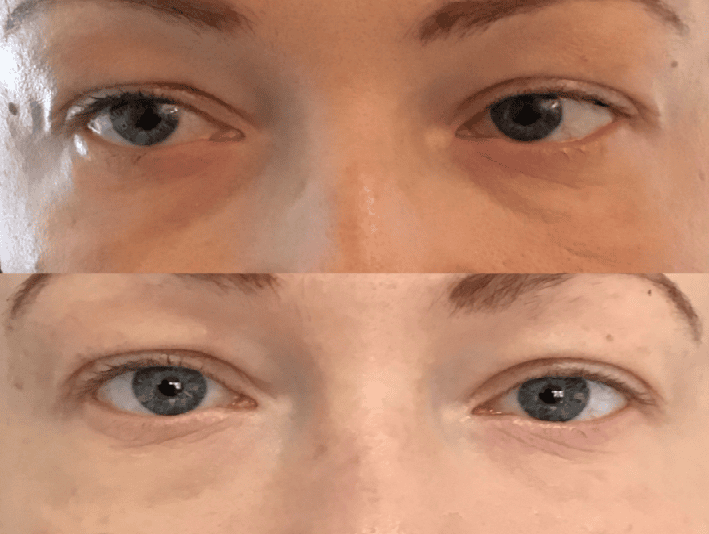
"Dark circles" is one of those phrases used for several completely different things, which is part of why so many products aimed at them simply don't work for everyone. A widely cited review of the condition splits dark circles into three main types: pigmented, where the skin itself holds more colour, vascular, where visible blood vessels show through unusually thin skin, and structural, where the darkness isn't pigment or blood at all, it's shadow, cast by the same hollowing and volume loss we've just been talking about.
If yours is the structural kind, the answer is often what we've just covered: tear trough filler or cheek filler. Sunekos, which we'll come to next, can also play a supporting role here. There's no separate "dark circle treatment" required if shadow/hollowing is confirmed as the cause, it's the same cause by another name.
If pigment is playing a role too, that's a different conversation, and often a genetic one, more commonly seen in darker skin tones. It calls for a dedicated hyperpigmentation consultation rather than a skin ageing one, something we offer here at our St. Albans clinic. “Superficial hyperpigmentation under the eye can be treated with the Fraxel 1927nm laser, though it's honest to say that when pigment sits deeper in the skin, common with the genetic kind, results are harder to achieve.” explains Nurse Jane. That's worth knowing before you book. But for the shadow most people mean when they say their under-eyes look dark, hollowing is very often the true cause.
If your under-eye concern is texture rather than shadow: fine crinkling, a slightly papery look, skin that's lost its bounce, this is where Sunekos and Thermage may come in, two very different treatments doing a similar job from different angles.
Sunekos is an injectable mix of hyaluronic acid and specific amino acids, and unlike a filler, it isn't there to add volume. Laboratory research on this exact combination found that particular amino acids in the mix directly switch on elastin production in human skin cells, alongside collagen, which matters given how little new elastin your body makes once you're past your twenties. There's clinical backing for the eye area specifically too: a 2023 trial testing this treatment in the periorbital region measured real improvement on a dark circle scoring scale as well as periorbital wrinkling. Worth knowing: this isn't the same mechanism as filler, it's working on skin quality rather than replacing lost volume, but that improvement in thickness and hydration can be enough to soften mild hollowing on its own, or to smooth over the last touch of shadow if you've already had cheek filler and there's still a little visible underneath.
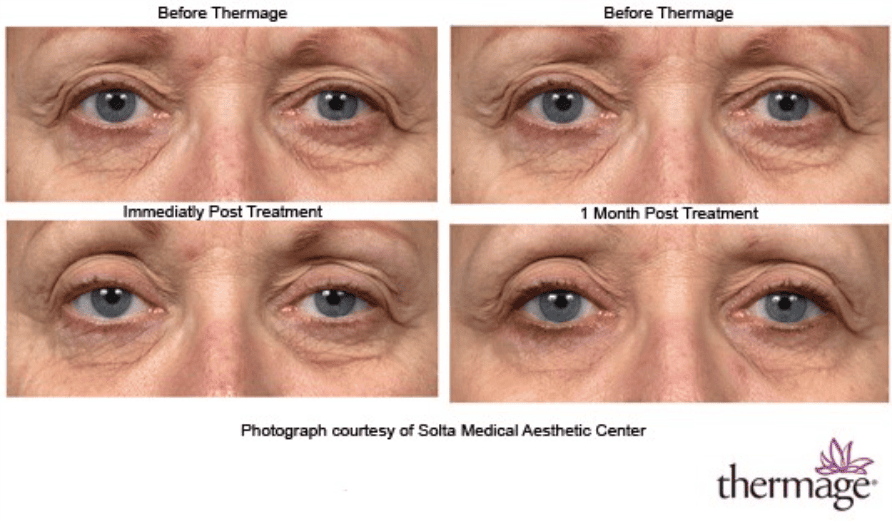
Thermage works differently, it is completely non-invasive and uses radiofrequency energy to heat the deeper layer of skin and encourage it to remodel and tighten from within. It's been studied specifically for this area too: an early multicentre study on radiofrequency for periorbital tissue tightening documented measurable improvement in skin laxity around the eyes. Although this can work beautifully under the eyes for the concerns mentioned, it’s also an extremely popular option at our St. Albans clinic for upper eyelids that are starting to sag and look heavy.
“One thing we're asked about often enough to address directly: people regularly ask us about Profhilo under eyes before and after results, and the honest answer is simple, we don't use Profhilo in this area, it’s not designed for it,” says Nurse Natalia. “It's a treatment we use elsewhere on the face, neck, decolletage, even the body, but not around the eyes”.
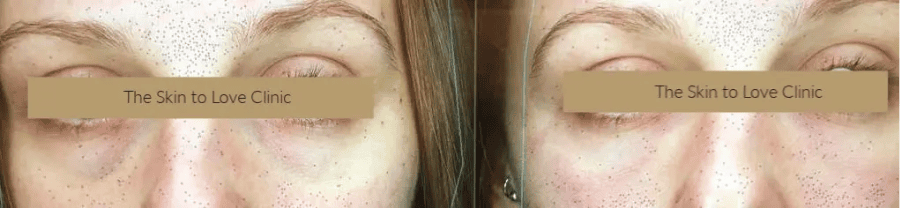
These images show real results from the Sunekos treatment at The Skin to Love Clinic in St. Albans and are used with the patient's consent. Patient was treated for mild dark circles under the eyes. Individual results vary and are not guaranteed. This image is not intended to represent a typical result for every patient.
These Thermage before and after images are provided courtesy of the manufacturer, and do not feature patients of The Skin to Love Clinic. We share them as an llustration of what Thermage eye treatment can achieve in clinical practice. We note the improvement in upper eyelid sagging as well as an improvement in crepey skin under the eyes. We're proud to respect our own patients' privacy completely, which is why we never pressure anyone to share their results online. Individual results vary and are not guaranteed. This image is not intended to represent a typical result for every patient.
Most fine lines around the eyes, the ones that show when you smile or squint and are just starting to linger afterwards, come down to that muscle movement we talked about earlier. Wrinkle-relaxing injections work directly on this: by softening the muscle's contraction, the skin stops folding as intensely in the same place thousands of times a day, which is often enough on its own to help lines that are still mostly dynamic rather than a permanent fixture.
But not every wrinkle stays that simple. Nurse Natalia explains: “If wrinkles are more advanced, more etched in, present even when your face is completely still, muscle relaxing alone may not be enough because it doesn't rebuild what the skin itself has lost”. This is where polynucleotides, Sunekos, or in some cases microneedling, come in as a genuine next step something your practitioner can discuss with your once you’ve seen how your wrinkle relaxing results settle, if you’d like to take things further. A 2026 study looking specifically at polynucleotide injections for under-eye wrinkles and crow's feet followed 42 patients and found significant improvement at every check-in over six months, with high satisfaction and very few side effects. There's good evidence for combining the two approaches directly, too: a randomised, split-face trial testing Botox alongside a regenerative skin booster in the periorbital area found the combination outperformed Botox alone for wrinkles rated as moderate to severe.
The takeaway: wrinkle-relaxing is usually the place to start if wrinkles are caused by muscle movement, but if your skin needs more than muscle stillness to properly recover, that's exactly what a course of treatments such as polynucleotides, microneedling, or Sunekos is designed to help with.
Every treatment above works with what your skin can still do. None of them undo genuinely advanced changes that only a surgical option can help, and a good clinic will tell you that plainly rather than promise otherwise.
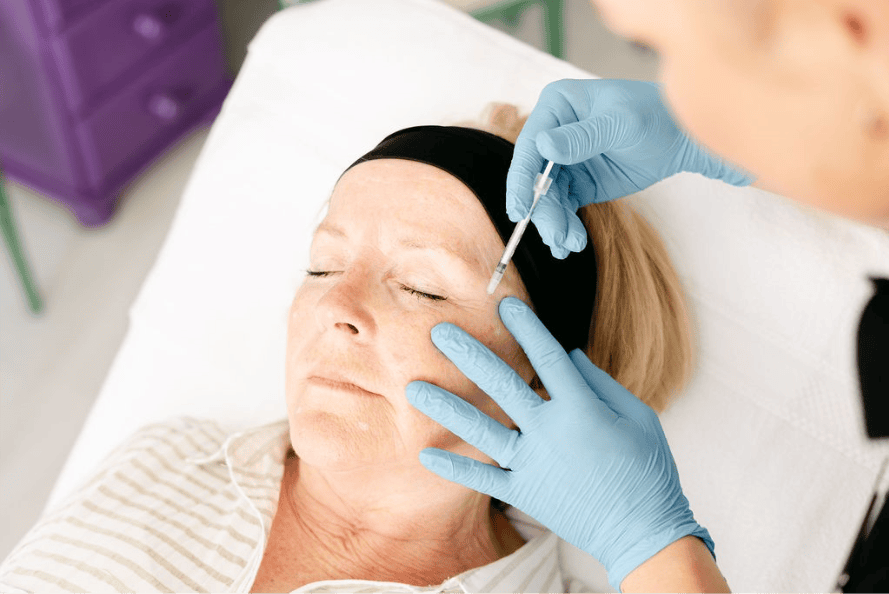
Regenerative treatments like polynucleotides and Sunekos, and skin-remodelling treatments like Thermage, are not overnight fixes. They work by prompting your skin to rebuild or remodel itself, which takes weeks, and the full improvement usually builds over months rather than days. If you want quick, dramatic change, this isn't that kind of treatment, and it never will be. What they do offer is a result that looks like you, simply more rested. Tear trough filler is the exception: results can be visible almost immediately, sometimes carried out across two sessions for the most natural outcome, but it doesn't take months to show the way these regenerative treatments do.
At the more advanced end, when there's genuinely significant excess skin or fat prolapse under the eye rather than simple hollowing, filler stops being the answer. Published clinical guidance on treating tear trough deformity with filler actually scores this formally: beyond a certain severity, the recommendation shifts from injectable treatment to a surgical assessment, because no amount of well-placed filler can fully correct what surgery is designed to address. Recognising that line is exactly what a thorough assessment is for, and we'd always rather tell you that upfront than treat around it.
And as covered earlier, pigment-based dark circles sit outside what any of these treatments are built for too, pigment tends to respond better to laser treatment instead. None of this is meant to talk you out of treatment. It's meant to make sure whatever you decide to have done is the right call for what's actually going on, and that's exactly where a consultation comes in, rather than generic guidance from the internet.
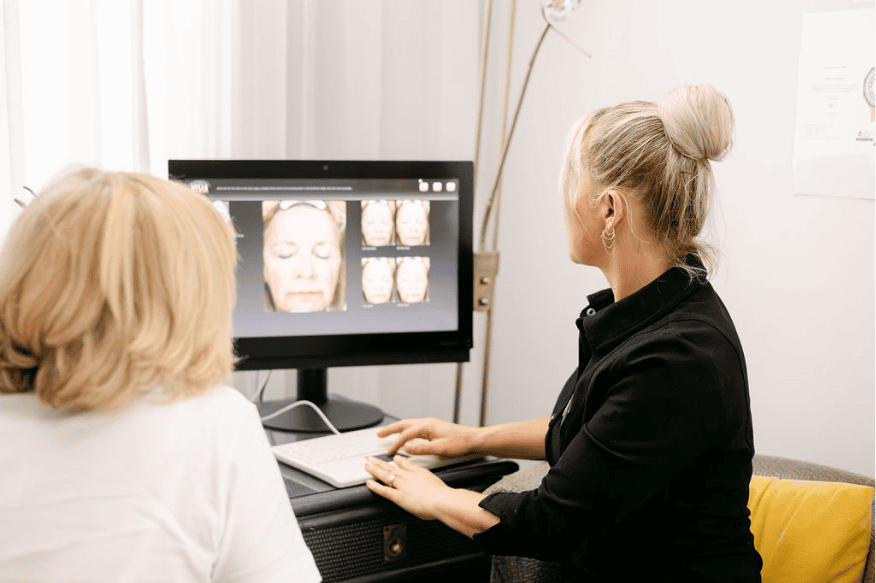
None of this is a menu you decide upon beforehand, and you don't need to come along with a full idea of what you need. Every treatment mentioned here starts with a thorough consultation to discuss what you'd like to achieve, your medical background, and any treatments that are a good match for you, not a quick chat before booking in for a trending treatment. This is all about you, what your concerns call for, and what's safe for you.
At The Skin to Love Clinic in St. Albans, that consultation means a genuine assessment of what's actually causing your concern, hollowing, texture, movement, or some combination of the three, before anything is recommended. Our practitioners aren't paid on commission, so there's no incentive to suggest more than you need, or the wrong treatment altogether. If the honest answer is a different treatment, a different area of your face entirely, or simply that now isn't the right time, that's what you'll be told.
We're a CQC regulated, Save Face accredited clinic, and we treat every area of the face with the same level of rigour, the eye area included. You deserve more than guesswork: more than an unregulated setting, more than unlicensed products, more than an imitation device standing in for the real thing, and choosing a clinic held to those standards is what guarantees it. What a thorough consultation with an experienced medical practitioner adds on top of that is judgement no article can give you: qualified nurses with real, hands-on experience in this exact area, offering an assessment of what's actually going on with you, and a recommendation built around that, not around what someone wants to sell.
The only way to know which of this truly applies to you is to have that conversation properly. Book a skin ageing consultation with our team in St. Albans and discuss together what your eyes need. If you feel your concern is related to hyperpigmentation under the eyes, rather than the concerns we've discussed in this blog, contact our helpful team to book the right consultation
Disclaimer: This blog is not to be used for diagnostic purposes. We are all unique which means that our results, recovery and suitability for any type of treatment will vary. Always seek the advice of a professional should you have any health or cosmetic concerns or to discuss treatments specifically for you.

Written by clinic co-founder Kerri Lewis | Medically reviewed by Nurse Jane Lewis, RN | The Skin to Love Clinic, St. Albans | CQC regulated | Save Face accredited | HydraFacial verified provider | Published September 2026. The difference between a facial and a HydraFacial isn’t just the products and ingredients used. It’s how they […]

18 Sep 2026

Written by Kerri Lewis, Co-founder | Medically reviewed by Nurse Jane Lewis RN, The Skin to Love Clinic, St. Albans | CQC regulated | Save Face accredited | Published September 2026. That mark on your chest. The small rough patch on the back of your hand. The little bump just below your hairline that looks […]
10 Sep 2026
Menu
Contact
T: 01727 837429
E: info@theskintoloveclinic.co.uk
E: feedback@theskintoloveclinic.co.uk
Feedback directly to CQC: https://www.cqc.org.uk/give-feedback-on-care
The Skin to Love Clinic
13-15 Chequer Street,
St Albans,
Hertfordshire,
AL1 3YJ

Subscribe
To receive the latest offers and updates enter your email address below to sign up to our mailing list.
You may opt out at any time.
Open© 2026 The Skin to Love Clinic | Cookie & Privacy Policy | Company Privacy Notice | Website Disclaimer | Web design by Cariad Marketing The Skin To Love Clinic Registered Address: Unit 4, Sandy Court, Ashleigh Way, Plympton, Plymouth PL7 5JX. Registered Company 08397290. VAT Reg: 162291028.


