

If you’ve found yourself looking up ‘Sculptra near me’ or ‘Sculptra St. Albans’, you’re quite likely looking for a way to restore your skins appearance with one of the many non-surgical cosmetic treatments available on the market today without the ‘overfilled’ look sometimes associated with aesthetic treatments. You want to look like yourself still, just on your best day.
At The Skin to Love Clinic, a CQC-regulated medical-aesthetic skin clinic in Hertfordshire, we treat so many women in their 30s and beyond who are navigating the biological shift of collagen decline and facial volume loss. Naturally, they’ll each be noticing different things at different ages and life stages, but one thing is true for all; from the age of 20, our collagen levels decrease by around 1% per year, therefore, by the age of 40 we’ll have lost about 20% of our skin’s collagen.
This collagen production decline is further accelerated significantly during both perimenopause and menopause. In fact, women can lose up to a further 30% of their collagen within the first 5 years of perimenopause.
This is your evidence-based guide to the science, expectations, and clinical results of Sculptra.
What Is In This Blog:
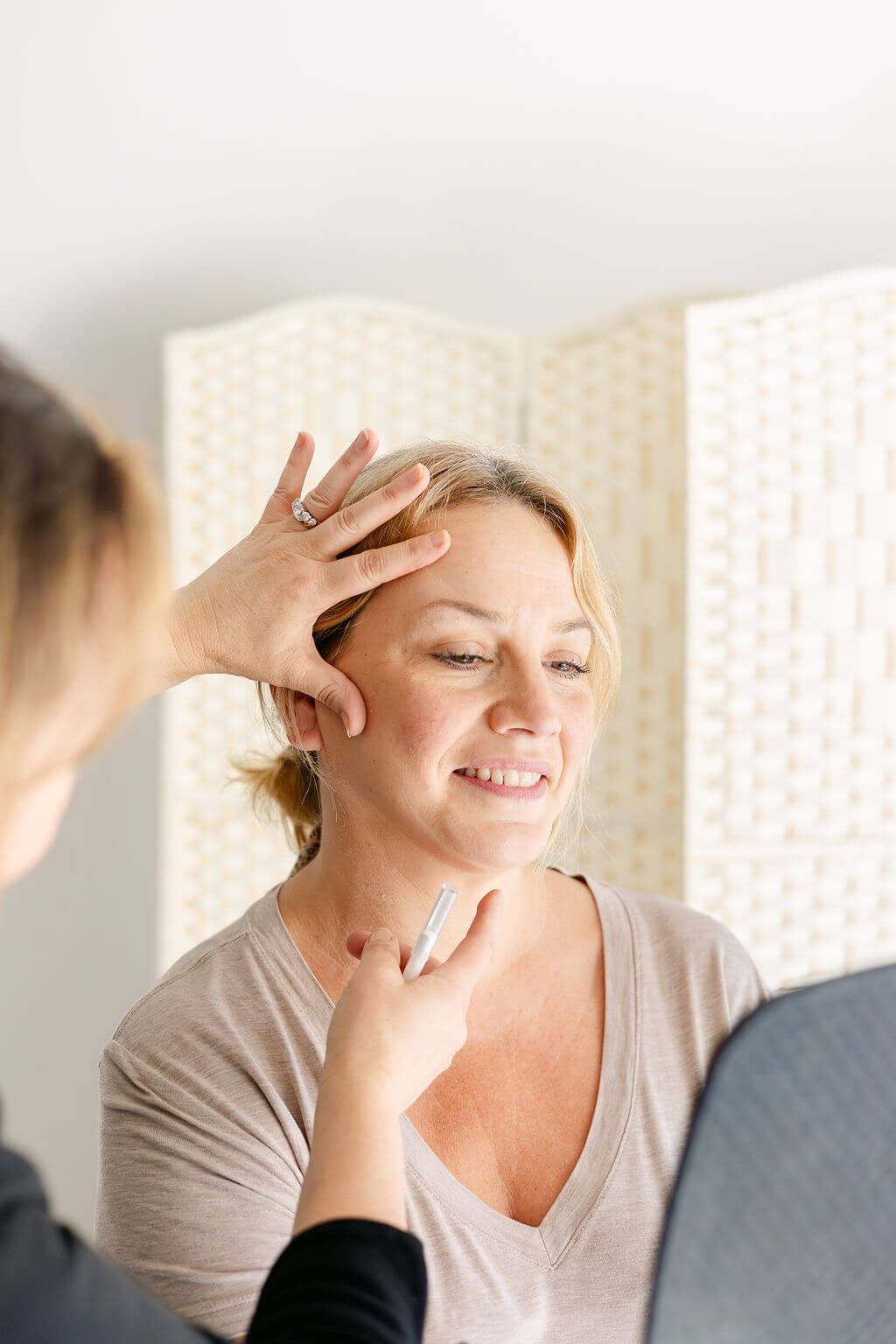
Sculptra is an injectable skin treatment that has a bio-stimulatory effect on the skin. It’s made up of biocompatible Poly-L-Lactic Acid (PLLA) and sterile water which is used as a carrier for the PLLA. Unlike traditional dermal fillers that physically occupy space in the tissues to replace lost volume, Sculptra acts like a signal. This signal leads to the recruitment of fibroblast cells which are responsible for the production of collagen.
The main ingredient in Sculptra is Poly-L-Lactic Acid, simply referred to as PLLA. PLLA has been used safely in medical treatments for over 30 years, for example, dissolvable stitches. Once injected, the PLLA particles are slowly metabolised by the body and turned into carbon dioxide and water, which are safely removed via the body's waste system. What’s left behind is a beautiful new matrix of your own natural collagen.
Clinically proven studies published in the Journal of Drugs in Dermatology show that the active ingredient in Sculptra, PLLA, stimulates Type I Collagen. In a 3D skin model, research also indicates that PLLA can upregulate the skins extracellular matrix which contains vital proteins essential for the skins internal scaffolding, including those that give it strength and allow the skin to snap back into place.
This is a great question and one that can offer somewhat conflicting answers. Sculptra is often categorised as a filler, however it shares no chemical similarities with hyaluronic acid gels, traditionally known as fillers. Sculptra and dermal fillers are also used for different indications by medical-aesthetic practitioners for their patients.
Traditional fillers provide immediate volume using hyaluronic acid gel. They’re perfect for replacing volume that has been lost from natural fat pads; think cheeks, lips. As the hyaluronic acid gel gradually breaks down, the filler results gradually fade.
Sculptra is a liquid (sterile water) that contains PLLA particles; it’s not a gel. The PLLA particles simulate improved skin quality and are quite quickly removed from the body. Because the PLLA is a catalyst for your tissues regenerating themselves, the results do not fade with the breakdown of the PLLA. The PLLA leaves behind it a network of new collagen and a strengthened extracellular matrix which, as it is your natural tissue, ages as you age.
Peer reviewed clinical trials show significant improvements in skin quality:


Disclaimer: This blog is not to be used for diagnostic purposes. We are all unique which means that our results, recovery and suitability for any type of treatment will vary. Always seek the advice of a professional should you have any health or cosmetic concerns or to discuss treatments specifically for you.

Written by clinic co-founder Kerri Lewis | Medically reviewed by Nurse Jane Lewis, RN | The Skin to Love Clinic, St. Albans | CQC regulated | Save Face accredited | HydraFacial verified provider | Published September 2026. The difference between a facial and a HydraFacial isn’t just the products and ingredients used. It’s how they […]

18 Sep 2026

Written by Kerri Lewis, Co-founder | Medically reviewed by Nurse Jane Lewis RN, The Skin to Love Clinic, St. Albans | CQC regulated | Save Face accredited | Published September 2026. That mark on your chest. The small rough patch on the back of your hand. The little bump just below your hairline that looks […]
10 Sep 2026
Menu
Contact
T: 01727 837429
E: info@theskintoloveclinic.co.uk
E: feedback@theskintoloveclinic.co.uk
Feedback directly to CQC: https://www.cqc.org.uk/give-feedback-on-care
The Skin to Love Clinic
13-15 Chequer Street,
St Albans,
Hertfordshire,
AL1 3YJ

Subscribe
To receive the latest offers and updates enter your email address below to sign up to our mailing list.
You may opt out at any time.
Open© 2026 The Skin to Love Clinic | Cookie & Privacy Policy | Company Privacy Notice | Website Disclaimer | Web design by Cariad Marketing The Skin To Love Clinic Registered Address: Unit 4, Sandy Court, Ashleigh Way, Plympton, Plymouth PL7 5JX. Registered Company 08397290. VAT Reg: 162291028.


